Agra: India’s Timeless City of the Taj on the Banks of Yamuna
(Agra – Uttar Pradesh, India)
Agra-Historic monument
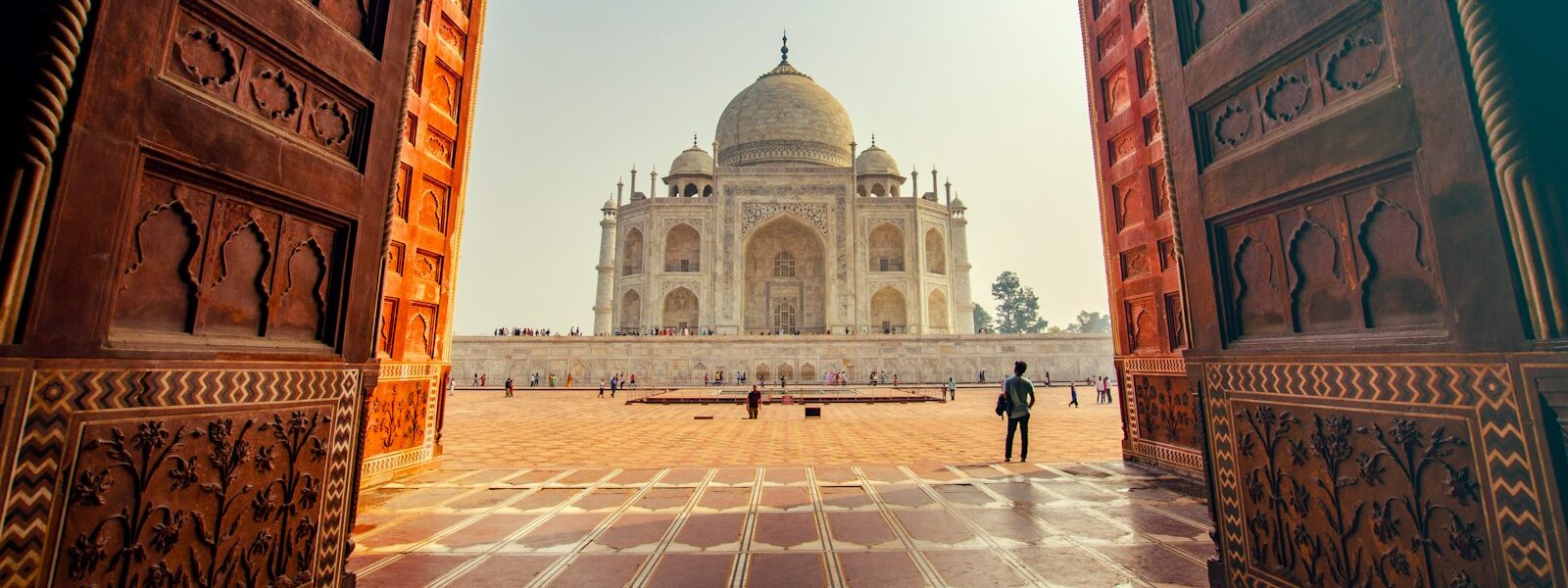
Agra, located in the northern Indian state of Uttar Pradesh, is among India’s most iconic travel destinations. Famed as the home of the Taj Mahal, one of the New Seven Wonders of the World and a UNESCO World Heritage Site, Agra also boasts a rich tapestry of Mughal history, culture, and architectural grandeur. It sits gracefully on the banks of the Yamuna River and served as a capital under several Mughal emperors.
The city’s heritage includes forts, mausoleums, gardens, and bustling bazaars, offering travelers a complete immersion into India’s royal past. Agra is part of the iconic Golden Triangle circuit along with Delhi and Jaipur, making it a staple in many India itineraries.
Agra appeals to a wide range of travelers: families eager to witness the Taj Mahal at sunrise, couples seeking romantic backdrops, solo explorers delving into Mughal stories, and history buffs fascinated by intricate architecture. Beyond monuments, Agra offers lively streets, local markets, traditional sweets (especially petha), and a vibrant culinary scene. For photo enthusiasts, sunrise and dusk lend dramatic lighting to the monuments. In short, Agra is not just about its famous mausoleum — it’s a journey through centuries, a sensory mix of heritage, culture, and local life.
How to Reach Agra
By Air
Agra has a domestic airport (Agra Airport / Kheria) but flight options are limited. For greater connectivity, most travelers fly into Indira Gandhi International Airport, Delhi (DEL) and then proceed by road or rail (about 3–4 hours).
By Train
Agra is very well-connected by rail. Major stations include Agra Cantt (AGC), Agra Fort (AF), and Raja Ki Mandi (RKM). Trains from Delhi (Shatabdi, Rajdhani, Mail) take about 2–3 hours depending on service. From other states, overnight trains are common.
By Road / Bus / Car
Agra is connected by national highways. From Delhi by road, it takes roughly 3–4 hours (approx 210–230 km) depending on traffic. State-run and private buses ply frequently. Taxis / cabs are also available from Delhi, Jaipur, Mathura, and other nearby cities.
Local Transportation & Safety Tips
Within Agra, auto-rickshaws, cycle-rickshaws, taxis and app-based cab services help you move between attractions.
Use government-approved guides at monuments (especially Taj) — check for identity badge.
Avoid traveling in unlit or isolated areas late at night; stick to main roads.
Traffic congestion can delay inter-monument travel — allow buffer time.
Tourist Attractions in Agra
Here are the best attractions, must-visit places, and top sightseeing spots in Agra:
Taj Mahal — The iconic white marble mausoleum, symbol of love and Agra’s primary draw.
Agra Fort — A massive Mughal fort-palace overlooking the Yamuna with rich history.
Itimad-ud-Daulah (Baby Taj) — Elegant tomb known for pietra dura work and delicate craftsmanship.
Mehtab Bagh — Gardens across the river offering a romantic view of the Taj at dusk.
Fatehpur Sikri — The abandoned Mughal capital, near Agra, with palaces, mosques, courtyards.
Akbar’s Tomb, Sikandra — The grand mausoleum of Akbar in a large garden complex.
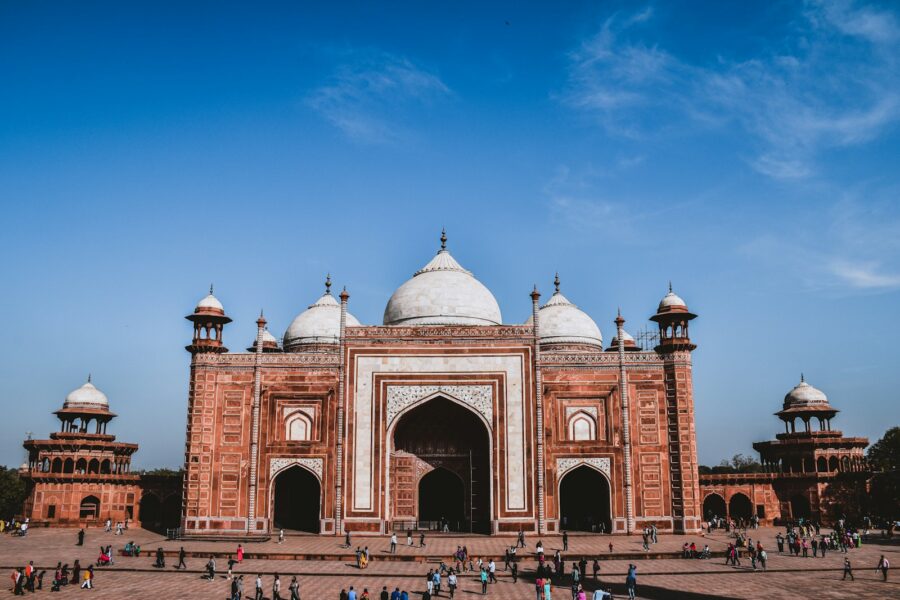
Jama Masjid, Agra — One of Agra’s largest mosques near the Jama Masjid Bazaar.
Ram Bagh (Ram Bagh Gardens) — Historic Mughal garden, one of the oldest in Agra.
Chini Ka Rauza — Tomb known for glazed tile work (china tiles) and Persian architecture.
Soor Sarovar Bird Sanctuary / Keetham Lake — Nature escape just outside Agra for birdwatching. (To be expanded)
Things to Do in Agra
Here’s a list of top experiences and things to do in Agra:
Visit Taj Mahal at sunrise or sunset for optimal photography and ambiance
Explore Agra Fort with a guided historic walk
Walk across Mehtab Bagh at twilight to see reflection of Taj
Spend a half-day in Fatehpur Sikri (day trip)
Tour Akbar’s Tomb at Sikandra
Stroll through Jama Masjid and nearby bazaars
Discover pietra dura inlay work at monuments and workshops
Shop at Kinari Bazaar, Sadar Bazaar, Taj Ganj for handicrafts and souvenirs
Try local street food and sweets (especially petha, chaat)
Enjoy a river-view walk by the Yamuna
Birdwatching / nature walks at Soor Sarovar / Keetham Lake
Best Time to Travel
Ideal Season / Months: November to February — pleasant, cool weather (around 8°C–25°C), great for sightseeing.
Peak Season: December–February sees high tourist footfall and slightly higher rates
Shoulder Months: October, March — good balance of weather and fewer crowds
Summer (April–June): Very hot (often above 40 °C) — plan early morning/late evening visits
Monsoon (July–September): Rainy, humid, occasional flooding or waterlogging — crowds are fewer, but sightseeing may get interrupted
Comparative Advantages
Winter & cool months: comfortable walking, clear skies, good photos
Summer: fewer tourists, but heat is challenging
Monsoon: green landscapes, fewer crowds, though possible rain disruption
Events & Precautions
Major Festivals & Events
Taj Mahotsav (annual cultural festival, February) — music, dance, crafts, local arts
Diwali / Dussehra — celebrations across Agra with lights and local fairs
Eid / Ramadan — special gatherings near mosques and markets
Republic Day / Independence Day — national celebrations around monuments
Safety & Precautions
In crowded events or festivals, guard your belongings carefully (pickpocket risk)
Avoid unlicensed guides offering “skip-the-line” at high markup — use government-approved ones
At Taj Mahal, large bags, tripods, food, and drones are often prohibited — read rules in advance
In monsoon, some monuments’ pathways may become slippery — wear appropriate footwear
In summer, stay hydrated, apply sunscreen, avoid midday sun
Useful Travel Tips
Transport & Local Guide: Hire government-approved guides at monuments, ask to show ID.
Currency & Payments: Indian Rupees (INR). Carry small denominations. Many places accept cards but remote shops may be cash-only.
Accommodation: Large variety from budget guesthouses to luxury hotels (some with Taj views). Book early in peak season.
Internet / Connectivity: Mobile & 4G generally available; Wi-Fi in many hotels.
Language: Hindi is dominant; English is understood in tourist areas.
Sustainable Travel & Responsible Tourism: Avoid single-use plastic, minimize littering at monuments and gardens, use eco-friendly transport where possible.
Health & Wellness: Carry a small first-aid kit, mosquito repellent in summer, water bottle, and hand sanitizer.
Packing Essentials: Light breathable clothes, a shawl or scarf for temple/modesty, comfortable walking shoes, sunscreen, umbrella for rain.
Connectivity & Communication: Save numbers for your hotel, cab services, local emergency services; offline maps can help if network is weak.
Local Etiquette & Cultural Norm: Dress modestly (especially at religious sites), remove shoes where required, ask before photography of people, be respectful in mosques and tombs.
Shopping Guide & Souvenirs: Buy marble inlay items, leather goods, carpets, handicrafts, local sweets (petha), traditional footwear. Haggle politely, shop from trusted stores.
Things Not to Do / Avoid
Don’t carry large bags or backpacks into the Taj — many items are restricted
Avoid climbing monument walls or restricted zones
Don’t accept help from unofficial “helpers” at monument gates — they may overcharge
Don’t litter or scribble on walls or monuments
Avoid visiting in midday heat without breaks
Don’t trust unsolicited offers for private tours at steep discounts
Don’t block pathways or step into flower beds in gardens
Health & Safety: Use bottled water, avoid street food if unsure, carry necessary medications
Emergency Numbers / Apps:
• India Emergency Helpline: 112
• Local Police Helpline / Tourist Police (ask your hotel)
• Save your hotel contact, cab service, and hospital numbers
• Use apps like Google Maps, local ride apps
Suggested Itinerary
3-Day Itinerary (Popular)
Day 1: Arrival & Taj Introduction
Arrive (via train / car / air) and check in
Afternoon: Relax, light walk around Taj Ganj area
Evening: First view of Taj Mahal at sunset
Day 2: Monument & Heritage Day
Early morning: Sunrise visit to Taj Mahal
Midmorning: Visit Agra Fort
Lunch
Afternoon: Visit Itimad-ud-Daulah (Baby Taj) and Chini Ka Rauza
Evening: Walk in Mehtab Bagh to view Taj from across Yamuna
Day 3: Day Trips & Departure
Morning: Visit Akbar’s Tomb (Sikandra)
Then drive to Fatehpur Sikri (half-day trip)
Return, shop in bazaars (Kinari, Sadar)
Departure
5-Day Itinerary
Follow: Day 1 to Day 3 plan from “3-Day Itinerary” above
Day 5: Nature & relaxation — Soor Sarovar Bird Sanctuary / Keetham Lake, leisure strolls, departure
7-Day Itinerary
Follow: Day 1 to Day 3 plan from “3-Day Itinerary” above
Day 4: Explore nearby villages, handicraft centers, local experiences
Day 5: Scenic drive to Agra countryside or outlying heritage spots
Day 6: Day trip to Mathura / Vrindavan or Etmadpur
Day 7: Final shopping, revisit favorites, depart
Nearby Destinations for Extended Trip
Fatehpur Sikri (≈ 40 km) — Mughal ghost town built by Akbar; reachable by road (~1 hour).
Mathura / Vrindavan (≈ 60–70 km) — Birthplace of Lord Krishna, very vibrant religious towns; road or train.
Gwalior (≈ 120 km) — Historic fort city; reachable by train or road (~2–3 hours).
Delhi (≈ 210–230 km) — National capital, historic & modern; road or train ~3–4 hours.
Jaipur (≈ 235–250 km) — Pink City, palaces, forts; can be reached via road or rail (~4–5 hours).
Agra to Chambal / wildlife region (nearby) — for nature or safari stay.
Trip Extension Tips: Link Agra with Golden Triangle (Delhi–Agra–Jaipur), or with spiritual circuits (Mathura/Vrindavan). Use Agra as a hub to radiate out to heritage & cultural towns.
Must Try – For Foodies
Indian Veg & Local Cuisine
Jhankar (Agra) — Indian & Mughlai vegetarian & non-veg menu.
The Salt Cafe Kitchen & Bar (Taj Ganj) — café style with fusion, vegetarian & non-veg.
Dasaprakash — South Indian vegetarian cuisine in Agra.
Good Vibes Cafe — light meals, healthy options in Agra.
Taj Bano — international & Indian menu, highly rated.