Ayodhya: The Sacred Birthplace of Lord Rama & Spiritual Heartland
(Ayodhya – Uttar Pradesh, India)
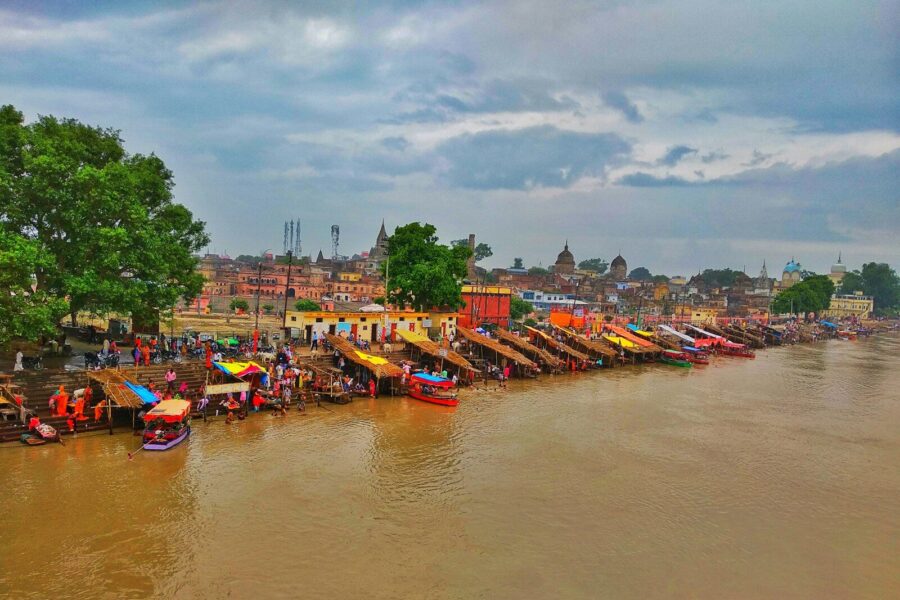
Ayodhya-Saryu riverfront
Ayodhya, located on the eastern banks of the Saryu River in Uttar Pradesh, is one of India’s most sacred and historically resonant pilgrimage destinations. Referred by many as Ram Janmabhoomi Dham, it is believed to be the birthplace of Lord Rama — a central figure in the Hindu epic, the Ramayana. Its spiritual significance, coupled with evolving temple architecture and renewed heritage projects, positions Ayodhya as not just a religious site, but a vibrant living city of devotion and tradition.
The culture of Ayodhya is deeply rooted in ritual life, temple ceremonies, devotional music (bhajans, kirtan), and mythological storytelling. Over the centuries, successive dynasties and devotees have contributed to temples, ghats, and infrastructure, enriching its architecture and urban form. It continuously attracts pilgrims, spiritual tourists, and those curious about India’s mythic past.
Ayodhya appeals to a broad spectrum of travelers: devoted pilgrims seeking darshan, families wanting immersive cultural experience, history and architecture enthusiasts exploring temple styles, and spiritual seekers looking for sacred ambiance. The city offers temple circuits, riverside ghats, aarti ceremonies, and storytelling walks through old lanes. The contrast of early morning mist on the Saryu, chanting echoing across ghats, and temple towers against sky make it uniquely evocative.
In short, Ayodhya is more than pilgrimage — it’s a journey into myth, faith, and belonging.
How to Reach Ayodhya
By Air The nearest major airport is Ayodhya International Airport (Orai/Ayodhya Airport) (recently upgraded) — providing connections to major Indian cities. For many travelers, Lucknow (Chaudhary Charan Singh Airport, ~130 km away) remains a practical hub. From Lucknow, road travel to Ayodhya takes ~2.5 to 3 hours.
By Train Ayodhya is well connected via Indian Railways. Key stations include Ayodhya Junction and Ayodhya Cantt. For example, Ayodhya–Delhi Express connects the city to Delhi in about 11 hours 10 minutes over ~614 km. Many long-distance trains pass through or terminate at Ayodhya.
By Road / Bus / Car Ayodhya is accessible by state and national highways. The Faizabad / Ayodhya Bus Depot (UP Roadways) connects with cities like Delhi, Lucknow, Jaipur, etc. Taxis and private cars are commonly used from nearby hubs. Roads are generally in decent condition, though traffic and congestion near core pilgrimage zones may slow travel.
Local Transportation & Safety Tips
Use auto-rickshaws, cycle rickshaws, or local taxis for inner-city travel.
Walk between closely clustered temples and ghats — many core sites are pedestrian accessible.
At busy hours (morning darshan, evenings), traffic congestion is common — plan buffer time.
Confirm fares in advance for taxis/autorickshaws or use apps if available.
Tourist Attractions in Ayodhya
Here are Ayodhya’s best attractions, must-visit places, and top sightseeing spots:
Ram Janmabhoomi / Shri Ram Mandir — The central pilgrimage site, believed birthplace of Lord Rama.
Hanuman Garhi — Elevated temple devoted to Hanuman, access via steep stairway, panoramic views.
Kanak Bhavan — Temple said to be gifted to Sita, known for its elegant architecture.
Nageshwarnath Temple — Ancient temple, traditionally attributed to Kush (Rama’s son).
Treta Ke Thakur — Believed site of Rama’s Ashvamedha Yajna.
Ram Ki Paidi (Saryu Ghats) — Series of ghats along Saryu where devotees bathe and perform rituals.
Choti Chhavani — Historic spot linked to Rama’s palace roots and old city charm.
Dashrath Bhavan / Royal Houses — Remnants of ancient royal residences associated with the mythic king Dashrath.
Imambada & Gulab Bari — Persian-style structures and mausoleums in Ayodhya’s heritage mix.
Saryu Riverfront & Ghats — Riverside walkways and ghats of spiritual ambience.
Things to Do in Ayodhya
Here are some must-do experiences and activities in Ayodhya:
Start early with morning darshan in the Ram Mandir complex
Climb up to Hanuman Garhi, enjoy views, pray, and chant
Walk through old city lanes, experience local life and temple precincts
Perform or witness aarti / puja ceremonies at Saryu ghats
Take a riverside boat ride on the Saryu (where permitted)
Visit Kanak Bhavan, Nageshwarnath and lesser-known temples
Attend storytelling or Ram Katha sessions in evenings
Explore Imambada / Gulab Bari for architectural variety
Engage with local devotees and scholars to learn mythological lore
Participate in festivals and events if your travel aligns
Best Time to Travel
Ideal Season / Months: October to February — cool, dry weather, comfortable for exploration.
Peak Season: November to January — maximum pilgrim influx, festive energy
Summer (April–June): Hot and humid; daytime temple visits can be tiring
Monsoon (July–September): Occasional rain and humidity can affect open areas, but the city becomes lush
Comparison: Visiting in winter offers pleasant walks and full access; summer travel may require early morning / late evening scheduling; monsoon can make some ghats slippery or inaccessible.
Events & Precautions
Major Events, Festivals & Celebrations
Deepotsav — festival of lights in Ayodhya, with illumination of temples and ghats; in 2025, a thematic projection mapping show is planned.
Ram Navami — celebration of Lord Rama’s birth, draws large pilgrim crowds
Diwali — grand lighting at ghats and temples
In 2025, Valmiki and Nishadraj temples added to the Ram Janmabhoomi complex are getting focus and are expected to open around November.
Precautions During Events / Travel
During festival days, ghats, pathways and temple complexes see high density — carry minimal belongings.
Avoid overcrowded narrow lanes; move slowly and stay with groups.
At river edges or ghats, watch your footing — steps may be wet or uneven.
Avoid unlicensed guides or unauthorized “VIP darshan” offers — always use official channels.
In summer, carry water, sunscreen, and avoid midday exposure.
In monsoon, be cautious of waterlogging, slips, and disrupted paths.
Useful Travel Tips
Transport & Local Guide: Use authorized guides for temple circuit tours; avoid unverified touts.
Currency & Payments: Indian Rupee (INR). Many shops accept digital payments; but in temples / stalls cash is often preferred.
Accommodation: Guesthouses, Dharamshalas and hotels are available, especially near Ram Mandir and core zones. Book in advance for festival periods.
Internet / Connectivity: 4G mobile network is available; Wi-Fi in many hotels but may be weak in old city alleys.
Language: Hindi is primary; locals also speak Awadhi dialect. English works in tourist areas.
Sustainable Travel & Responsible Tourism: Do not litter temples or ghats, avoid plastic, support local artisans.
Health & Wellness: Carry a basic first-aid kit, mosquito repellent, bottled water, sanitizer.