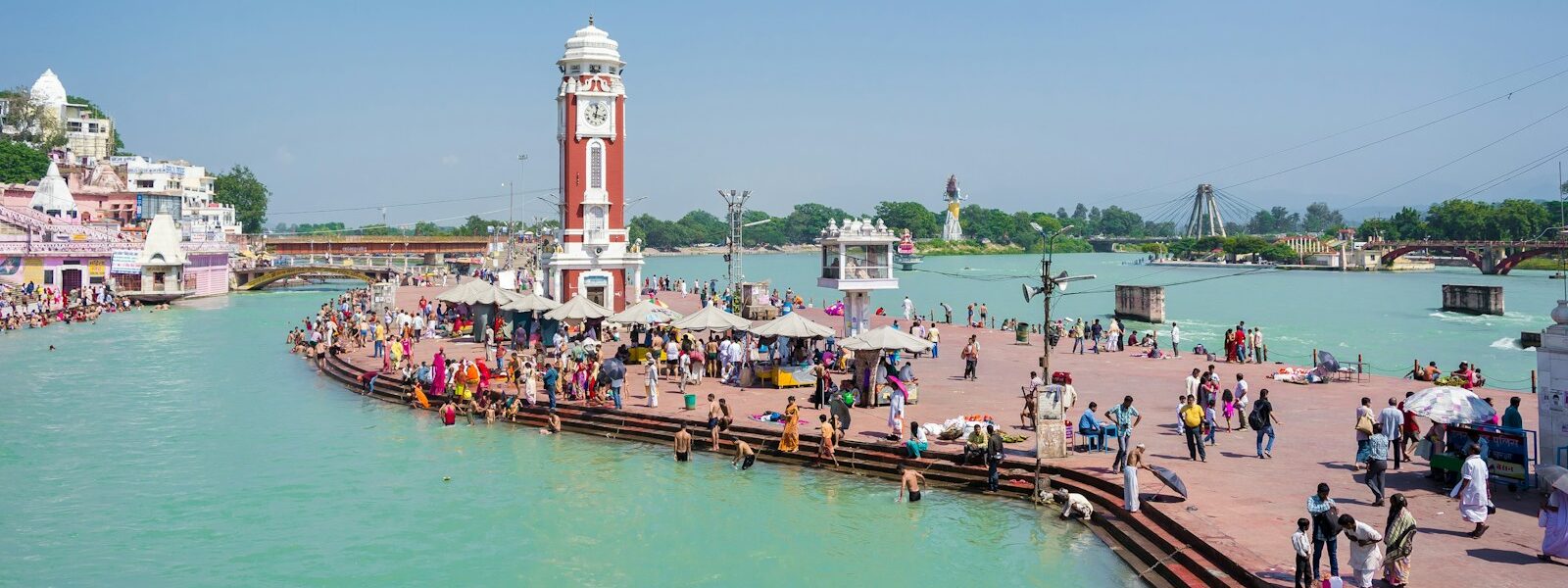
Haridwar (sometimes spelled Haridvāra) is one of India’s most venerated pilgrimage cities, located in Uttarakhand at the foothills of the Himalayas. It is known as one of the seven holiest places (Sapta Puri) in Hindu tradition and features prominently as a key hub for spiritual seekers. The name “Haridwar” literally means “Gateway to Lord Vishnu (Hari),” symbolizing its status as a spiritual passage to the divine
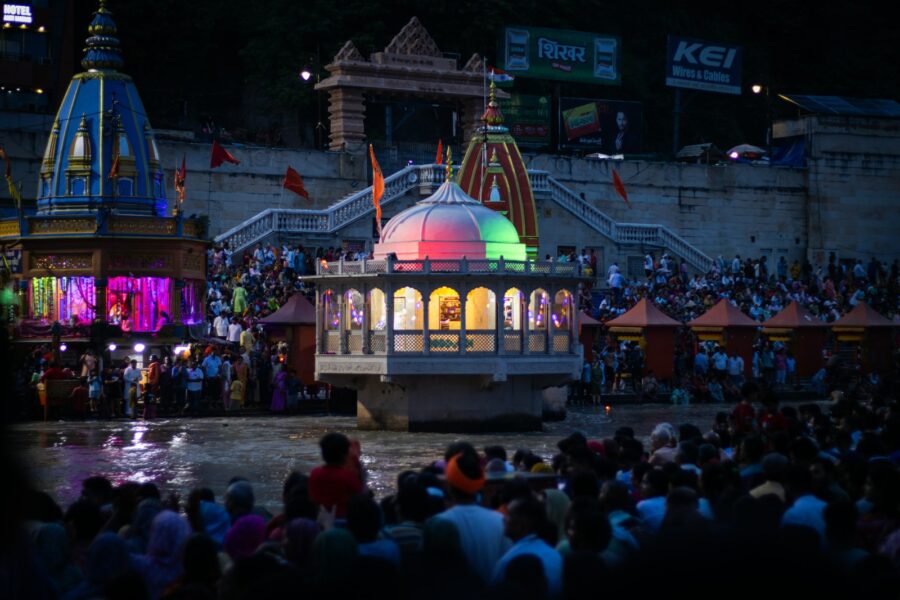
Haridwar’s spiritual tradition centers around the sacred Ganges River, which flows through ghats where pilgrims bathe, pray, and perform rituals. Its ghats, especially Har Ki Pauri, are world famous for the evening Ganga Aarti, a mesmerizing ritual where lamps are floated on the river. The city also houses hilltop temples like Mansa Devi and Chandi Devi, both accessible via ropeway or trekking.
What makes Haridwar special is the blend of sacredness and everyday life. Families, devotees, solo travelers, and culture enthusiasts all find something here—whether it’s meditation in ashrams, participating in rituals, exploring ancient temples, or simply absorbing the spiritual energy by the river. Beyond spirituality, Haridwar offers local markets, heritage architecture, and nature escapes in surrounding hills and forests. For someone seeking to combine pilgrimage with cultural immersion, Haridwar offers depth, continuity, and a connection to India’s spiritual roots.
How To Reach Haridwar
By Air: The nearest airport is Jolly Grant Airport (Dehradun, DED), about 25–35 km from Haridwar. Road travel from the airport to Haridwar takes roughly 1 to 1.5 hours, subject to traffic.
By Train: Haridwar has its own railway station well connected to Delhi, Kolkata, Mumbai, and other major cities. Trains from Delhi typically take about 4–6 hours, depending on service. Many pilgrims arrive via Haridwar Junction and proceed to the ghats by short local transport.
By Road / Bus / Car: Haridwar lies on the National Highway network and is well connected by road to Delhi (approx 5–7 hours by car or bus), Rishikesh, Dehradun, and other Uttarakhand towns. State buses, private coaches, and shared taxis are frequent.
Local Transportation & Safety Tips
Use autos or cycle rickshaws in the old city or ghat zones, negotiating fare in advance.
Walking is often the best option around ghats and local temples, but be cautious of narrow lanes and crowds.
Be alert near riverbanks, especially during high-flow periods in monsoon.
Avoid traveling alone in isolated stretches at night.
Tourist Attractions in Haridwar
Here are some of the best attractions, must-visit places, and top sightseeing spots in Haridwar:
Har Ki Pauri — The most sacred ghat on the Ganges, site of famous evening Ganga Aarti.
Mansa Devi Temple — Hilltop temple dedicated to Goddess Mansa Devi, accessible by ropeway or trek.
Chandi Devi Temple — Another prominent hilltop shrine reachable via ropeway.
Daksheswar Mahadev Temple — Historic Shiva temple in Kankhal, associated with legend of Daksha Prajapati.
Clock Tower (Raja Birla Tower / Ghantaghar) — Landmark clock tower near Har Ki Pauri offering views of the ghat.
Shantikunj & Gayatri Parivar — Spiritual and philanthropic center offering meditation and retreats.
Ganga Aarti at Har Ki Pauri — Emotional ritual of lamps floated, music, chants each evening.
Local old city & ghats — Walk through old lanes, temples, waterside stairs, and markets.
Nearby nature / forest edges — small treks or green belts on the outskirts, especially toward the Shivalik foothills.
Here are key things to do and experiences you must try in Haridwar:
Attend the evening Ganga Aarti at Har Ki Pauri
Walk the ghats and dip in sacred waters (morning/ritual bath)
Take the ropeway / trek to Mansa Devi or Chandi Devi
Visit Daksheswar Mahadev Temple in Kankhal
Explore Shantikunj / Gayatri Ashram for spiritual teachings
Stroll through the old city lanes, small temples, markets
Spend quiet time at lesser-known ghats at sunrise
Participate in temple rituals, pilgrim ceremonies
Try street food and local vegetarian specialties
Use Haridwar as a base to visit Rishikesh, Rajaji National Park, or Himalayan foothill treks
Best Time To Travel
Ideal Months: September to November and February to April — moderate weather, clear skies, pleasant days.
Peak Seasons: March–April (spring) and during religious festivals or Kumbh Mela events
Monsoon (July–August): Heavy rainfall may affect ghats and outdoor walks; river flow is strong, caution needed
Winter (December–January): Cold mornings and nights, misty ghats — atmospheric but chilly
Comparison: Autumn and spring are ideal for combining outdoor sightseeing and spiritual rituals. Monsoon offers lushness but risks, winter offers calm devotion but colder weather.
Events & Precautions
Major Events / Festivities
Kumbh / Ardh Kumbh — Haridwar is one of the Kumbh Mela sites during periodic holy gatherings.
Kanwar Yatra — large pilgrimage during the month of Sawan, many devotees fetch Ganga water from Haridwar.
Local temple festivals such as Navratri, Maha Shivaratri held in Mansa Devi, Daksheswar temples.
Precautions
During large pilgrimage events, crowd density can be extreme — follow crowd control measures, avoid last-minute rushes.
In monsoon, parts of ghats, steps, or slopes may become slippery — wear good footwear.
For ropeway or temple access, check operating hours and safety protocols.
Don’t stray into river currents beyond bathing zones, especially during high flow.
Keep personal belongings secure in crowded areas near ghats.
Useful Travel Tips
Transport & Local Guide: Hire local guides for temple history or spiritual walks; use registered transport for pilgrim circuits.
Currency & Payments: Indian Rupee (INR). Most shops and eateries accept digital payments; carry some cash for small temples or stalls.
Accommodation: Options include ashram guest houses, mid-range hotels, and pilgrim lodges — book in advance during peak or festival times.
Internet / Connectivity: Mobile 4G works in most zones; many guest houses / hotels provide WiFi.
Language: Hindi is primary; English is understood in tourist and temple zones.
Sustainable Travel & Responsible Tourism: Avoid littering near ghats, use eco-friendly materials, respect holy spaces, minimize plastic.
Health & Wellness: Carry basic medicines, stay hydrated, avoid cold early morning dips if unwell.
Packing Essentials: Comfortable modest clothing (covering shoulders/legs in temple areas), good walking shoes, light jacket, umbrella/rain cover.
Connectivity & Communication: Save hotel, guide, local police contacts; carry power bank; use offline maps if required.
Local Etiquette & Cultural Norm: Dress modestly near temples and ghats; remove footwear before entering sanctums; follow instructions of temple staff.
Shopping Guide & Souvenirs: Buy prayer beads (mala), spiritual books, incense, brass puja items, local sweets and handicrafts from market lanes.
Things Not To Do / Avoid
Don’t wear revealing or overly casual clothes at ghats or temples
Avoid venturing into river beyond designated bathing zones, especially during high flow
Do not litter or pollute the Ganges or ghats
Avoid engaging in loud or inappropriate behavior near devotional zones
Do not haggle aggressively in sacred precincts — respect local custom
Avoid going on steep or secluded pathways alone, especially at night
Don’t carry non-vegetarian food — Haridwar is largely a vegetarian city during temple zones.
Things To Remember
Essential Packing Advice: Layers, modest clothes, umbrella, comfortable shoes, small backpack, first aid.
Health & Safety: Avoid extreme exertion, be careful with stairs and slippery surfaces, monitor health near river.
Suggested Itineraries
3-Day Itinerary (Popular)
Day 1: Arrival & Riverside Rituals
Arrive in Haridwar, check in
Visit Har Ki Pauri, attend evening Ganga Aarti
Stroll ghats and local markets
Day 2: Temples & Hills
Morning: Ropeway / climb to Mansa Devi Temple
Visit Chandi Devi Temple
Explore Daksheswar Mahadev Temple in Kankhal
Evening: revisit ghats, do smaller rituals
Day 3: Spiritual Immersion & Depart
Visit Shantikunj / Gayatri Ashram
Walk historical old city lanes, temples
Depart toward onward destination
5-Day Itinerary
Follow: Day 1 to Day 3 plan from “3-Day Itinerary” above
Day 4: Day trip to Rishikesh (nearby, for yoga, ashrams, rafting)
Day 5: Nature or forest walks in outskirts, revisit favorite spots, depart
7-Day Itinerary
Follow: Day 1 to Day 5 plan from “5-Day Itinerary” above
Day 6: Excursion to Rajaji National Park or Himalayan foothills
Day 7: Spiritual day — extended temple time, markets, farewell rites & depart
Nearby Destinations for Extended Trip
Rishikesh (25 km) — Yoga capital, adventure sports, ashrams — by road or shared taxi
Dehradun (35 km) — Gateway city with rail & airport links, colonial sites
Mussorie (65–70 km) — Hill station retreat from plains
Rajaji National Park (20-30 km outskirts) — wildlife and forest trails
Kankhal (within Haridwar) — historic temple zone near Daksheswar
Trip extension tip: Use Haridwar as spiritual base, then branch into nature, hills and adventure circuits via Rishikesh, Rajaji, Mussoorie for a holistic Uttarakhand trip.
Must Try — For Foodies
Indian Vegetarian / Local Cuisine
Hoshiyarpuri (Haridwar, Uttarakhand) — classic North Indian vegetarian fare in local style sets (@approx ₹ 200–₹ 600)
Cafe Pride (Haridwar, Uttarakhand) — casual café, snacks and drinks (@approx ₹ 100–₹ 300)
Because Haridwar is deeply religious, most eateries focus on pure vegetarian cuisine, with dhabas, local savory & sweet specialties, and cafés catering to tourists.