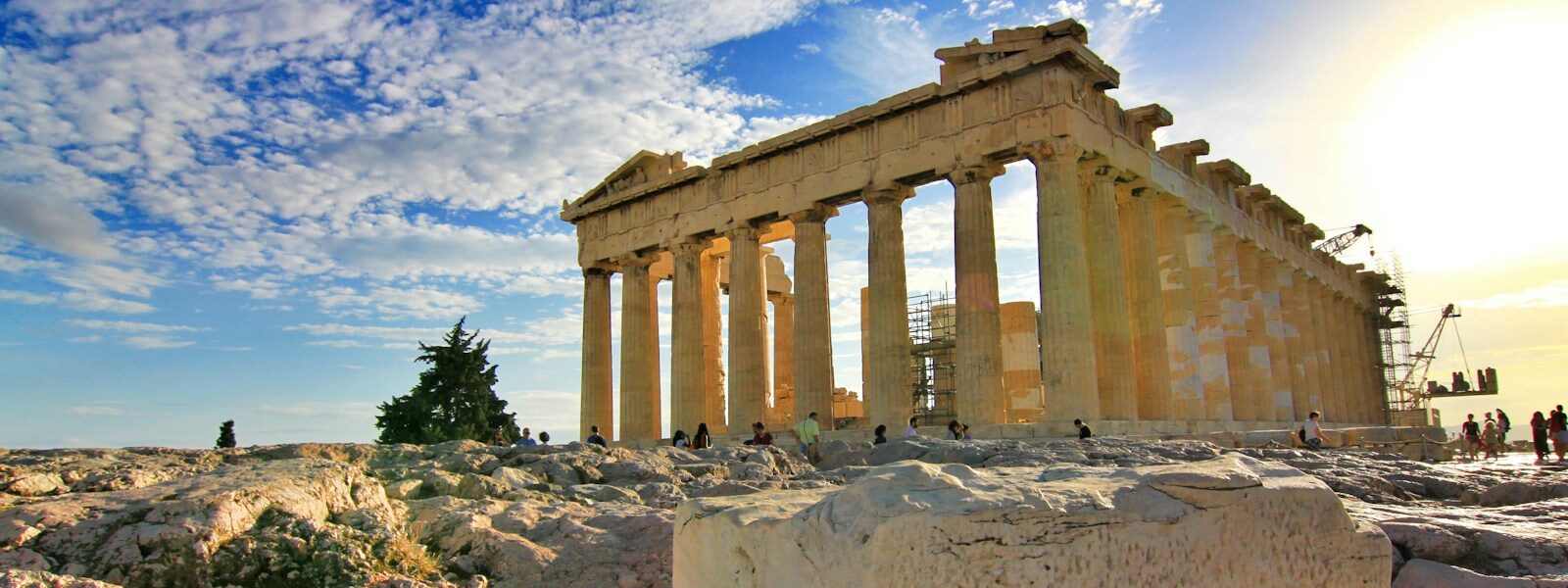
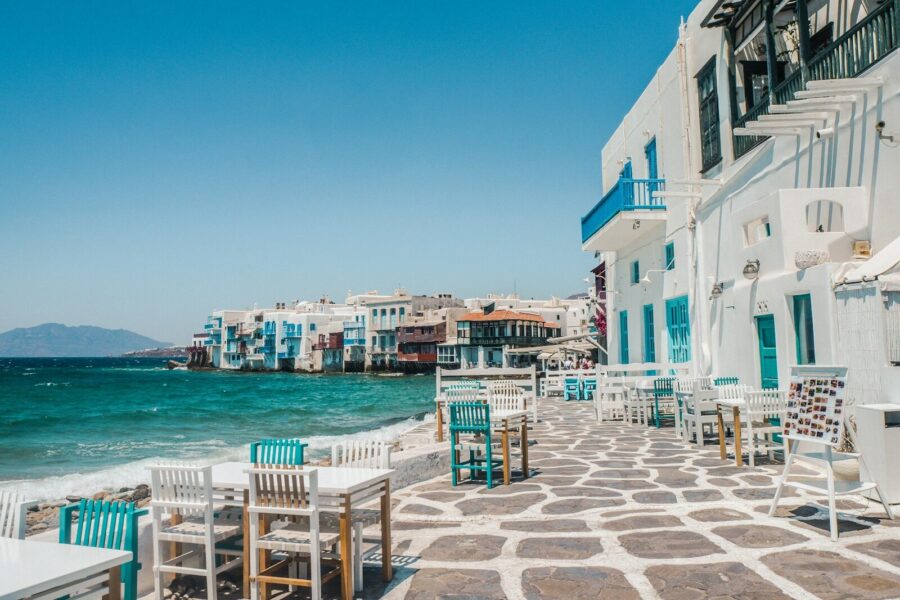
Greece, located in southeastern Europe, is a land where the echoes of antiquity resonate across spectacular blue seas and small island villages. With over 6,000 islands (around 200 inhabited), a rich classical history, and a culture steeped in mythology, Greece offers a timeless travel experience. The country’s heritage includes the Acropolis and Parthenon of Athens, the ancient ruins of Delphi, Olympia, and Mycenae, as well as Byzantine monasteries and Ottoman influences. Beyond its historical appeal, Greece is famed for its sun-drenched islands, turquoise waters, rugged coastlines, and warm hospitality.
For Indian travellers, Greece combines the comfort of modern tourism infrastructure with exotic appeal. Whether you are a family, honeymoon couple, backpacker, or adventure traveller, Greece can be tailored to your style. Families will love safe beaches, easy island-hopping, and mild adventures. Couples can enjoy romantic sunsets in Santorini or private villa stays. Backpackers will relish ferry networks, budget stays, and offbeat island life. Adventure seekers may trek the Samaria Gorge, dive wrecks, or go sea kayaking between islets.
Popular search keywords include “Greece travel guide,” “Greece itinerary,” “Greek islands,” “things to do in Greece,” and “best time to visit Greece.” What makes Greece special is its irresistible combination of historical depth, island beauty, flavorsome cuisine, hospitable locals, and flexible travel styles—from luxury stays to backpacker-friendly routes.
How to Reach Greece
Greece is well connected to major cities across Europe, the Middle East, and Asia — making it easy for Indian and international travellers to reach by air, sea, or combined routes.
By Air (Most Convenient)
The fastest and most popular way to reach Greece from India is by flight.
No direct flights currently operate between India and Greece, but one-stop connections are available from major Indian cities (Delhi, Mumbai, Bengaluru, Chennai, Hyderabad) to Athens International Airport (ATH) — the country’s main gateway.
Common stopover hubs include Dubai, Doha, Abu Dhabi, Istanbul, Frankfurt, Zurich, Paris, or London.
Airlines operating these routes include Emirates, Qatar Airways, Etihad Airways, Turkish Airlines, Lufthansa, Air France, Swiss Air, and British Airways.
Thessaloniki Airport (SKG) – northern Greece; gateway to Halkidiki and Meteora.
Heraklion Airport (HER) – main airport in Crete.
Santorini (JTR) and Mykonos (JMK) – serve direct European summer charters and inter-island flights.
From Athens, domestic flights by Aegean Airlines, Sky Express, and others connect to all major islands and regional cities.
By Sea
Greece is also accessible via ferry and cruise routes from nearby European countries:
Italy to Greece: Regular ferries operate from Venice, Bari, Brindisi, and Ancona to Patras, Corfu, or Igoumenitsa.
Turkey to Greece: Ferries connect Turkish coastal towns such as Bodrum, Marmaris, Fethiye, and Çeşme to Greek islands like Kos, Rhodes, Samos, and Chios.
These are great options for travellers already touring Europe or Turkey who want to enter Greece over water.
By Road / Train (from Europe)
If you’re travelling through Europe, Greece can also be reached by road or rail from neighbouring countries:
From North Macedonia, Albania, Bulgaria, or Turkey, you can drive or take long-distance buses to Athens, Thessaloniki, or Ioannina.
Eurail passes cover select train routes from Central Europe to Thessaloniki and onward to Athens. (Note: Not recommended from India directly — best for multi-country European trips.)
Local Transport Within Greece
Once you arrive in Greece:
Domestic flights connect major islands and cities.
Ferry networks link mainland ports like Piraeus (Athens) to islands such as Santorini, Mykonos, Naxos, and Crete.
Intercity buses (KTEL) and car rentals are convenient for mainland travel.
In Athens, the metro, taxis, and trams are reliable for short distances.
Tourist Attractions in Greece
Here are top must-visit places, best attractions, and sightseeing spots:
Acropolis & Parthenon, Athens – the crowning classical monument of Greek civilization
Ancient Agora, Athens – the heart of ancient Athenian civic life
Delphi Archaeological Site – once considered the center of the world in Greek myth
Olympia – birthplace of the Olympic Games
Meteora – monasteries perched atop towering rock pillars
Santorini (Oia, Fira, Caldera) – iconic island with caldera views and sunsets
Mykonos – lively nightlife, windmills, and Cycladic charm
Crete – the largest island, combining beaches, ancient palaces (Knossos), and gorges
Rhodes Old Town – medieval walls, knights’ castles, and old streets
Corinth & Mycenae – sites linking Homeric legends
Epidaurus – ancient theatre famed for its acoustics
Mount Olympus – mythical seat of the Greek gods and hiking destination
Nafplio – charming coastal town with strong Venetian architecture
Zakynthos / Navagio Beach – dramatic cove with shipwreck on sand
Things to Do in Greece
Here are top things to do, experiences, activities:
Island-hop via ferry (Cyclades, Dodecanese, Ionian)
Watch the Santorini sunset from Oia
Snorkel / scuba dive in clear Aegean or Ionian waters
Trek the Samaria Gorge in Crete
Visit monasteries of Meteora
Explore ancient ruins at Delphi, Mycenae, Epidaurus
Enjoy Greek island beaches and coastal walks
Take a cooking class in local Greek cuisine
Sail the Aegean / charter a yacht day trip
Drive the Peloponnese – Mycenae, Epidaurus, Nafplio
Relax in thermal springs (e.g. in Milos, Edipsos)
Attend a local festival or village fair
Take sunset cruises or catamaran tours
Best Time to Travel
The best season to visit Greece is late spring to early fall (May to October).
June to September is peak season: warm, dry, ideal for beaches and island hopping, but also crowded and more expensive.
May and October offer a sweet balance — pleasant weather, fewer crowds, lower rates.
Winter (November to March) is off-season: many hotels and ferries on smaller islands close; but Athens and Crete still accessible, and good for cultural travel or lower budget.
Festival benefit: summers bring many local festivals, music concerts, open-air events.
For island lovers, late May and September are especially ideal for combining lighter traffic and good sea weather.
Events & Precautions
Major Events & Festivals:
Athens Epidaurus Festival (summer) – theatre & cultural performances
Ohi Day (October 28) – Greek national holiday
Easter – deeply celebrated with processions and traditions (dates vary)
Panigiria / village festivals often in summer in islands (local music, dance, food)
Precautions & Safety Tips:
Be cautious of wildfire risk during hot dry summers — check local alerts (2025 has seen some fires in forested and island areas).
During crowded festivals or in summer, watch your belongings in crowded squares and public transport.
On smaller islands or remote paths, carry water, sun protection, and a map.
In monasteries, churches or religious sites, dress modestly (cover shoulders, avoid short shorts).
Check ferry schedules in advance — services might be fewer or canceled in off-season.
For solo women travellers: choose well-reviewed lodging, avoid isolated paths at night, share itineraries with contacts.
Beware of pickpockets in tourist hotspots and crowded metros/markets.
Useful Travel Tips
Transport & Local Guide: Use licensed local guides especially in historic sites; in islands, ferry and fast-boat networks are main links.
Currency / Money: Greece uses euro (EUR). Have a mix of cash and cards. Inform your bank ahead of travel.
Accommodation: Range from boutique hotels, guesthouses, cave homes (in Santorini), to budget hostels.
Internet & Communication: Free WiFi is common in hotels, cafés. Get a local SIM or eSIM for data.
Language: Greek is official; English is widely spoken in tourist areas.
Sustainable / Responsible Travel: Opt for eco-lodges, avoid single-use plastics, respect fragile island ecosystems (don’t walk on dunes or flora).
Health & Wellness: Carry basic medicines, altitude or motion sickness tablets for ferry rides, sunscreen, mosquito repellent.
Packing Essentials: Lightweight clothes, swimwear, comfortable walking shoes, hat, sunglasses, power adapter (Type C / F).
Local Etiquette & Cultural Norms: Greet with a “Kalimera / Kalispera” (good morning / evening), remove shoes in some homes, ask permission before photography in local villages.
Shopping & Souvenirs Guide: Look for local olive oil, honey, ceramics, woven textiles, worry beads (komboloi), local herbs, postcards — purchase from artisan markets to support local makers.
Things Not to Do / Avoid
Don’t enter churches or monasteries in revealing clothes (tank tops, shorts) — modest dress is expected.
Avoid littering on beaches or archaeological sites.
Don’t underestimate walking distances in towns — maps and comfortable shoes are key.
Avoid taking unlicensed taxis — always confirm metered fare or use reputable apps.
Don’t plan island hopping carelessly — leave buffer days for weather or ferry delays.
Avoid drinking tap water on smaller islands if advised otherwise.
Don’t flash valuables in crowded tourist areas.
In archaeological sites, avoid climbing on ruins or prohibited zones.
Don’t ignore safety advice during heatwaves or fire warnings.
Things to Remember
Pack copies of passport, travel insurance, visa, emergency contact info.
Keep a small first aid kit, sunscreen, rehydration salts.
Use travel apps (maps offline, ferry schedules) to stay informed.
Emergency number in Greece: 112 (general emergency).
India’s Embassy / Consulate contacts in Greece — check current address and phone before travel (via government site).
Suggested Itineraries
3-Day Itinerary (Popular)
Day 1: Arrival in Athens → Acropolis, Parthenon, Plaka neighborhood
Day 2: Day trip to Delphi or Cape Sounion (Temple of Poseidon)
Day 3: Fly or ferry to Santorini → explore Fira, Oia, sunset, then departure
5-Day Itinerary
Day 1: Arrive Athens, Acropolis, Ancient Agora, evening in Plaka
Day 2: Day trip: Delphi or Sounion or Corinth & Mycenae
Day 3: Ferry to Mykonos or Naxos; beach, town walk
Day 4: Ferry to Santorini, caldera views, sunset in Oia
Day 5: Explore Santorini (volcano, hot springs), ferry back to Athens / departure
7-Day Itinerary
Day 1: Arrive Athens — Acropolis, museums, evening in Monastiraki
Day 2: Athens to Delphi (or Peloponnese) → return
Day 3: Ferry to Mykonos (or Naxos), relax & local village walks
Day 4: Mykonos → ferry to Santorini, evening in Oia
Day 5: Santorini — volcano hike, hot springs, Akrotiri ruins
Day 6: Ferry or flight to Crete — visit Knossos, Heraklion
Day 7: Crete beaches / optional hike, depart to Athens or onward
Nearby Destinations for Extended Trip
Here are 5 destinations outside (or on border) you can add if extending your trip beyond Greece:
Turkey – Istanbul & Cappadocia (~1,200 km from Athens) — explore Byzantine and Ottoman history, hot-air balloons. Reach by flight (1.5–2 hrs).
Cyprus (~800 km) — Mediterranean island with Greek and Turkish heritage, reachable by short flight.
Albania – Albanian Riviera & Gjirokastër (~400–600 km) — offbeat beaches and Ottoman towns, reachable by road/ferry.
North Macedonia – Ohrid (~500 km) — ancient lakeside town, reachable by road from northern Greece.
Bulgaria – Plovdiv / Sofia (~700–1,000 km) — historical Balkan cities, reachable by flight or overland train.
Italy – Southern Italy / Amalfi Coast (via ferry or flight) — connect via flight from Athens or via ferry & train from Ionian islands.
Trip Extension Tips:
Check visa / entry requirements when crossing countries beyond Schengen.
Coordinate flights or rail in advance.
Allow buffer days for travel between countries.
Pack for climate shifts (Mediterranean, Balkan, Anatolian differences).
Must Try – For Foodies
Below is a curated list of restaurants / cafés in Greece (primarily Athens) categorized by cuisine:
Indian / Indian-Friendly
Sitar Indian Restaurant, Athens – local Indian cuisine, vegetarian focus (@ approx. €15–25)
The Zillers Rooftop, Athens – international / fusion rooftop experience (@ premium)
(Note: prices in euros; actual cost depends on location, menu choices, taxes.)
Additional Information
For Greek tourism info, see the official Greece Tourism site (visitgreece.gr).
For Schengen visa & consular procedures in India: check the Greece consulate / embassy or outsourced visa centers like Global Visa Center.
For travel alerts and advisories: check India’s Ministry of External Affairs, Greece’s civil protection, and local news.
Emergency number in Greece: 112 (general emergency).
India’s Embassy & Consulates in Greece: verify address, phone before travel (via MEA website).
Frequently Asked Questions
Yes, Indian citizens require a Schengen visa to visit Greece.
Greece can be moderate to expensive depending on island, season, and your style—off-season and budget stays can help control costs.
Generally yes — Greece is considered safe, especially in tourist areas; however, standard precautions (avoid isolated places at night, secure belongings) are wise.
Yes, English is commonly spoken in tourist sectors, hotels, restaurants, and among younger locals.
A 7-day trip is ideal to cover Athens, one or two islands, and some historical sites.
Yes — with good ferry/flight planning, you can island hop among Cyclades (e.g. Mykonos, Santorini) or Dodecanese.
Yes — many tavernas serve Greek salads, grilled vegetables, legumes, and modern restaurants cater to vegans/vegetarians.
Yes — insurance covering health, trip cancellations, emergencies, and delays is highly recommended, especially for island hops.
You can get prepaid SIMs from providers like Cosmote, Vodafone Greece, or Wind; eSIMs are also supported.
Tipping is appreciated but not mandatory — leaving 5–10% in restaurants is common; small tips for guides, taxis are standard.
Need Assistance?
For any questions about Attraction bookings, please reach out to us via WhatsApp or call.