Bhutan is a small Himalayan kingdom perched between India and Tibet, often described as the “Land of the Thunder Dragon.” It remains largely untouched by mass tourism, preserving its rugged landscapes, living Buddhist traditions, and deep spiritual tone. The nation’s unique development philosophy—Gross National Happiness—emphasizes cultural preservation, environmental sustainability and well-being over purely economic growth. Thus, Bhutan offers travellers a rare window into a society striving to balance modernity with heritage.
Historically, Bhutan resisted colonization and preserved its monarchy and cultural identity. Monasteries, fortresses (dzongs), traditional arts and religious festivals still define daily life. Popular search phrases among Indian travellers include “Bhutan visa for Indians,” “Tiger’s Nest Bhutan,” “Bhutan travel cost,” and “best places in Bhutan.”
Bhutan is special because it intentionally limits visitor numbers and encourages mindful travel. For Indian tourists, entry is simpler (no standard visa required) but permits and route permits are necessary. Families can enjoy cultural shows, valley walks and Dzong visits; couples can find spiritual retreats and quiet countryside stays; backpackers and adventure seekers can trek to remote valleys like Phobjikha or Laya; photography lovers capture prayer flags fluttering in mountain passes. Bhutan offers immersive journeys into Buddhist monasteries, Himalayan trails, traditional wood-carved architecture and regional festivals.
How To Reach Bhutan
(For Indian travellers entering Bhutan)
By Air: Druk Air and Bhutan Airlines link Paro International Airport with Indian cities like Delhi, Kolkata, Bagdogra, Guwahati. Paro is Bhutan’s only international airport. The flight from Bagdogra to Paro includes a road transfer of ~4 hours.
By Road / Land Borders:
Indians can travel to Bhutan by road via Phuentsholing (West Bengal/Jaigaon border). At the immigration office, an Entry Permit is issued.
You can also enter via other border posts as permitted with prior arrangements and route permits.
Train + Road Mix: You may take an Indian train to Hasimara / New Jalpaiguri and then proceed by road to the Bhutan border.
Tips on Local Transport Safety:
Bhutan’s roads are narrow, winding and mountain-cliff routes; avoid traveling at night in remote stretches.
Use a driver familiar with local mountain roads (often included in your tour). Independent travel is restricted.
Tourist Attractions In Bhutan
Here are top attractions, must-visit places and key sightseeing destinations in Bhutan:
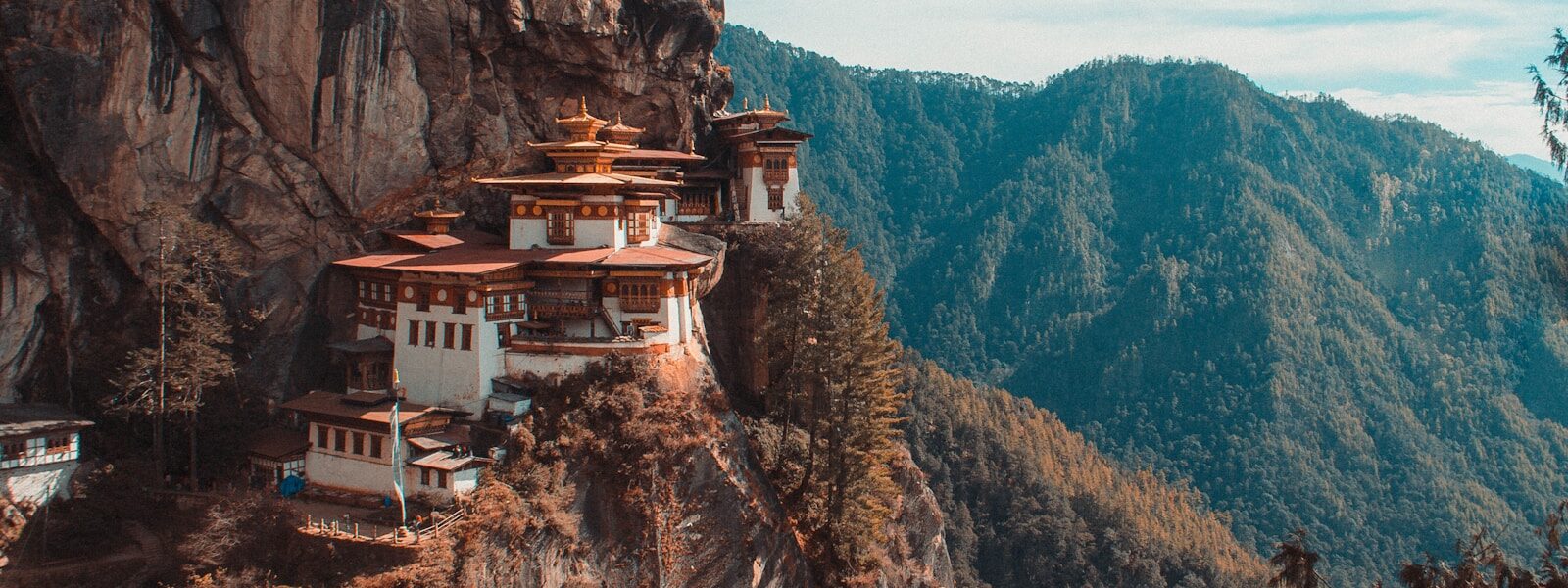
Taktsang Tiger’s Nest (Paro) — Iconic cliff-hanging monastery and Bhutan’s most photographed site.
Paro Rinpung Dzong & Paro Town — Fortified monastery overlooking Paro valley, near Paro Airport.
Thimphu (capital) & Buddha Dordenma — Modern city with cultural institutions and the giant Buddha statue overlooking valley.
Tashichho Dzong (Thimphu) — Royal fortress and administrative center near the capital.
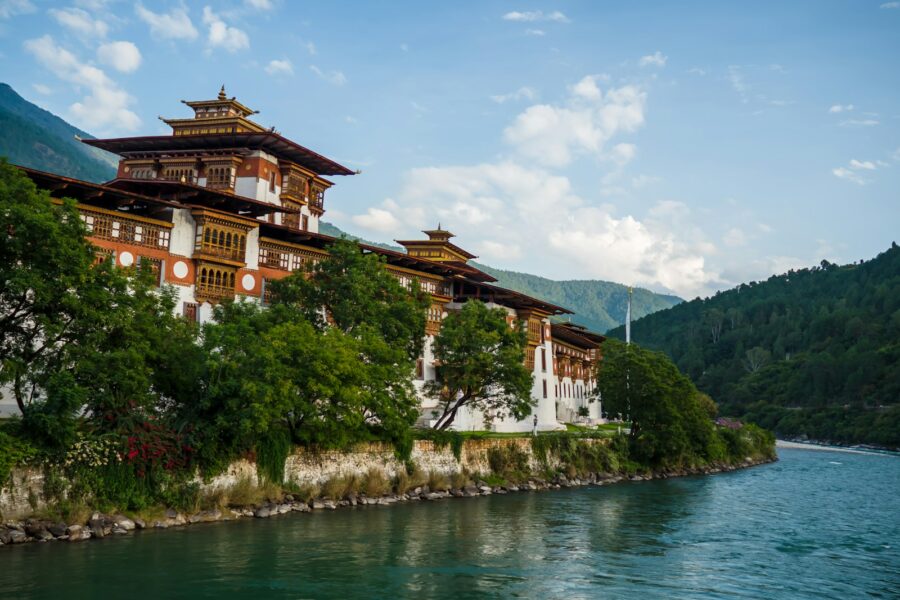
Punakha Dzong & Suspension Bridge — Historic fortress that once served as the winter capital; scenic riverside setting.
Dochula Pass & 108 Chortens — Scenic mountain pass with stupas and panoramic Himalayan views.
Phajoding Monastery (above Thimphu) — Monastery set high above the capital, lesser-visited and spiritual.
Talo Monastery (Punakha region) — Hill monastery known for local festivals and tranquil views.
Folk Heritage Museum (Thimphu) — Traditional house museum showcasing Bhutanese culture and rural life.
Bhairabkunda Shiva Mandir — A significant Hindu temple in Bhutan located in southeastern region, visited during festivals.
Things To Do In Bhutan
Hike to Tiger’s Nest (Taktsang) — a challenging but rewarding trek.
Attend a Dzong festival (Tshechu) and experience masked dances.
Drive via Dochula Pass for Himalayan panorama and 108 memorial chortens.
Visit Phajoding Monastery by trekking from Thimphu.
Explore Punakha Dzong and walk the suspension bridge over Pho Chu.
Walk through Thimphu markets, crafts schools and local life.
Relax and meditate at Buddha Dordenma statue site.
Visit the Folk Heritage Museum to see village architecture and rural crafts.
Experience the Talo Monastery festival (if timing aligns).
Drive through scenic rural roads and stop at traditional villages.
Best Time To Travel
Spring (March – May): Flowering rhododendrons, clear skies, moderate weather — ideal for hiking and sightseeing.
Autumn (September – November): Stable weather, clear mountain views, vibrant festivals — very popular season.
Winter (December – February): Cold at high altitudes; lower valleys remain accessible — good for lowland touring and fewer tourists.
Monsoon / Summer (June – August): Heavy rains in southern Bhutan and possible landslides — not ideal for trekking; you may still travel in central/northern areas if conditions allow.
Comparison & Guide: Spring and autumn are the best balance; winter gives solitude; avoid monsoon for higher regions.
Events & Precautions
Major Festivals / Events:
Paro Tshechu — festival in Paro showcasing traditional mask dances and religious performances.
Thimphu Tshechu — major religious festival in the capital.
Punakha Tshechu / festivals at the Punakha Dzong.
Talo Festival at Talo Monastery (regional festival).
Precautions:
During festivals, book accommodation and transport well in advance.
Travel permits and route permits must be in order — some regions require special permits.
In mountain areas, be careful of altitude and weather changes.
Respect local customs: modest dress, mindful behavior in monasteries.
Useful Travel Tips
Transport & Local Guide / Budget Travel: Bhutan requires registered local guides and prearranged tour packages in many cases. Independent roaming is limited.
Currency & Payment: Bhutanese Ngultrum (BTN) is currency; Indian Rupee is often accepted (same value) in many places.
Accommodation: Stay in licensed hotels / lodges included in your package.
Connectivity & Communication: Mobile networks cover towns; WiFi available in hotels; remote valleys may have weak signal.
Local Etiquette & Cultural Norms: Greet with “Kuzu Zangpo” (hello); dress modestly at religious sites (cover arms, legs); remove shoes and lower voice in monasteries.
Sustainable Travel & Responsible Tourism: Bhutan regulates visitor numbers, charges sustainable development fee; avoid litter, follow trails, support local businesses.
Health & Wellness: Acclimatize gradually, carry altitude sickness medication, stay hydrated, use sun protection.
Packing Essentials: Layered clothing, sturdy walking shoes, rain cover, personal medications, hat/gloves, reusable water bottle.
Shopping & Souvenirs: Traditional Bhutanese textiles (kira, gho), handwoven scarves, masks, Himalaya herbal products, locally made crafts.
Things Not To Do / Avoid
Don’t attempt to drive independently (foreigners usually cannot drive).
Don’t wear revealing clothing at temples; always be respectful.
Avoid straying off marked trails in remote areas.
Don’t photograph monks or sacred rituals without permission.
Don’t underestimate mountain weather — always have warm layers and check forecasts.
Don’t ignore permit / route restrictions — some checkpoints will stop you otherwise.
Things To Remember
Carry your travel documents, entry permit, route permit copies, and travel insurance.
Health & safety: be mindful of altitude, avoid strenuous activity on first day, insect repellent in lower regions.
Emergency / useful numbers: Bhutan Tourism, police / rescue helplines (check your tour package for exact local numbers).
Suggested Itinerary Options
3-Day Itinerary (Popular)
Day 1: Arrival at Paro → visit Paro Rinpung Dzong and Paro town
Day 2: Trek to Tiger’s Nest Monastery (Taktsang) in morning → afternoon transfer to Thimphu, explore Tashichho Dzong & city
Day 3: Thimphu sightseeing: Buddha Dordenma, Folk Heritage Museum, Traditional Market → depart
5-Day Itinerary
Day 1: Paro arrival, explore local monasteries and dzong
Day 2: Tiger’s Nest hike → return to Paro
Day 3: Drive to Punakha via Dochula Pass — visit 108 Chortens
Day 4: Explore Punakha Dzong, Talo Monastery or nearby hikes
Day 5: Return via Thimphu — cultural sites → depart
7-Day Itinerary
Day 1: Arrive Paro, light acclimatization
Day 2: Taktsang Monastery trek
Day 3: Paro → Thimphu (city tour, museums)
Day 4: Thimphu → Punakha via Dochula Pass
Day 5: Explore Punakha, Talo Monastery
Day 6: Punakha → Phobjikha Valley (if route permit allows) or return toward Paro
Day 7: Final visit (local markets, temples) in Paro → departure
Nearby Destinations For Extended Trip
(Regions / countries for onward travel beyond Bhutan)
Sikkim, India — Himalayan state with monasteries and scenic vistas; accessible via Indian border roads from Bhutan.
Darjeeling, India — Tea hills and views of Kanchenjunga; reachable by road from Siliguri/West Bengal.
Nepal (Kathmandu Valley) — Rich culture, mountains, temples; fly or combine routes for multi-country Himalayan circuit.
Tibet, China — For high plateau and Buddhist landscapes; plan via Lhasa from Indian / Nepal routes.
Assam / Northeast India — Cultural and wildlife diversity less than a day’s journey from southern Bhutan.
Trip extension tip: coordinate visa / permit requirements across countries; allow buffer days for overland border crossings; align travel seasons across regions.
Must Try — For Foodies
Indian / Vegetarian Options
Guests traveling via Indian routes can request vegetarian meals in hotels/ lodges — Bhutan cuisine often includes plenty of vegetarian curries, rice and buckwheat preparations.
Local Bhutanese Cuisine
Ema Datshi (chili + cheese) — national dish, served widely.
Kewa Datshi (potato + cheese)
Momos (dumplings) — Bhutanese style, with vegetable, pork or cheese filling.
Red rice & buckwheat breads — staple grains in valleys.
Butter tea (Suja) and local butter wine in remote homestays.
Café / International / Guesthouse Meals
Many hotels and lodges in Paro, Thimphu, Punakha serve international / continental menus along with Bhutanese.
Guesthouse kitchens in rural areas often prepare simple Nepalese / Indian + Bhutanese dishes.
Cost per person: moderately higher than remote India but controlled by tour packages; local meals may range ~BTN 200–600 depending on region.
Additional Information
Official Bhutan Tourism: https://bhutan.travel — for permits, rules, festival calendar, contacts.
Travel Guidelines for Indians: Indians do not need a visa to Bhutan, but must carry a valid passport (min 6 months) or voter ID and process an Entry Permit at border or Paro.
Emergency & Embassy Contacts: List provided by Bhutan tourism / India Embassy in Bhutan; keep contacts from your tour operator too.
Frequently Asked Questions
No — Indian citizens do not need a visa; they need a valid Indian passport or voter ID and an entry permit issued at the border or Paro.
A 5 to 7-day trip is optimal to cover Paro, Thimphu, Punakha and a trek or valley region.
Costs are controlled by government policies; tour packages include many expenses. Still, remote areas and premium lodges may cost more.
Not fully — travel is typically via guided tours with transport and guides; permit regulations apply.
Bhutan collects a daily sustainable development fee for all foreign visitors (except Indians) to support conservation and infrastructure.
Yes — Indian Rupees are accepted in many places at par with Ngultrum (BTN).
Bhutanese Ngultrum (BTN); but Indian Rupee is often accepted in practice.
Dzongkha is the national language; English is widely used in tourism, administration and education.
Yes — travel insurance is often mandatory for Indian tourists; basic vaccinations recommended (consult travel clinic).
Yes — many destinations are high altitude; acclimatize gradually and avoid sudden exertion on day one.
Tshechu festivals typically happen in spring and autumn seasons; check Bhutan tourism calendar for exact timing.
Need Assistance?
For any questions about Attraction bookings, please reach out to us via WhatsApp or call.